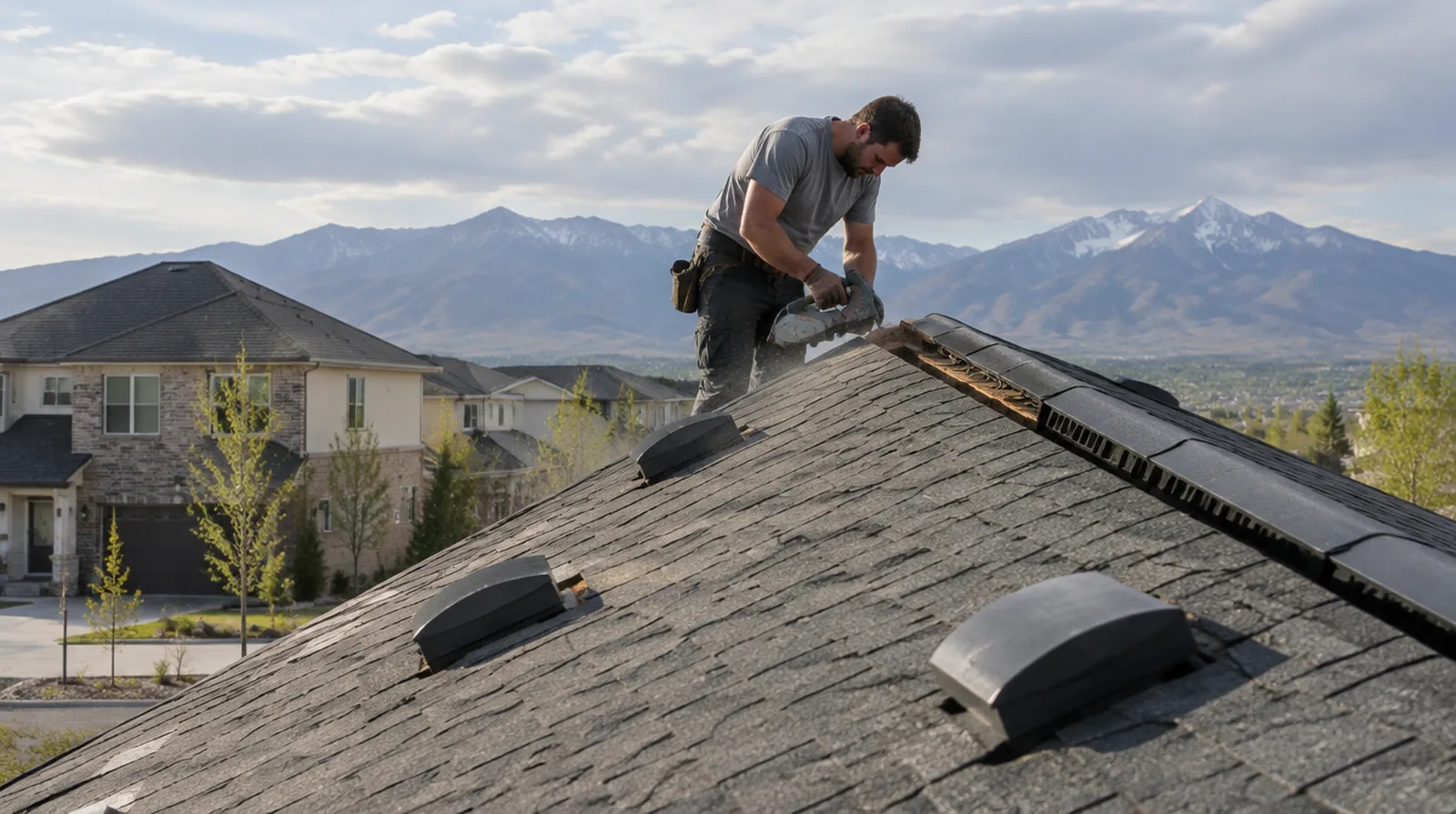
How roof ventilation helps in a four-season climate
A ventilated attic pulls outside air in at the eaves and lets it out at the ridge. In summer, that flow carries heat out before it can bake the deck and shingles. In winter, it keeps the attic cold, so snow on the roof melts evenly instead of melting high and refreezing at the eaves. It also carries away moisture that rises from the house, which otherwise condenses as frost on the underside of the deck.
Many older ramblers and split-levels were built with limited ventilation, often just a few box vents and small soffit openings. Later insulation upgrades sometimes blocked those soffits entirely.
Signs your attic needs better ventilation
- Large icicles and ice dams along the eaves
- Frost on the underside of the deck in winter
- An extremely hot attic in summer
- Shingles aging faster than expected
- Damp insulation or mildew in the attic
How we improve ventilation
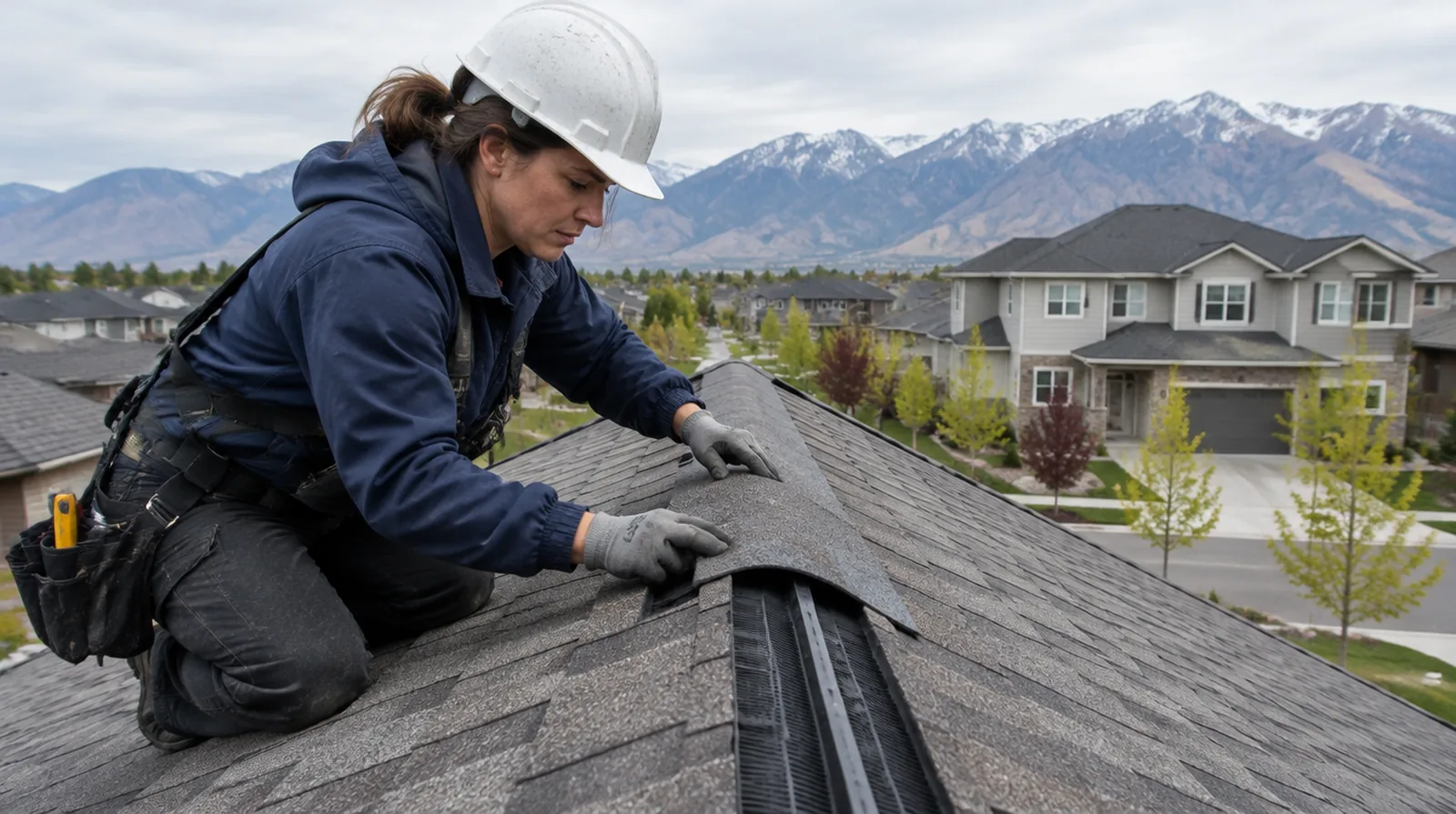
We start in the attic, measuring how much intake and exhaust you have and checking whether insulation is blocking the eaves. Then we design a balanced system that moves air from soffit to ridge.
A continuous ridge vent is often the best exhaust option on shingle roofs, and the easiest time to add one is during asphalt shingle replacement. At the eaves, we open or add soffit vents and install baffles so insulation cannot block airflow. Ventilation reduces ice dams and heat but does not stop leaks that are already happening; for that, see our leak repair service.
Ventilation and ice dams
Ice dams form when the upper roof deck is warm enough to melt snow while the eaves stay cold. Good ventilation keeps the whole deck cold and even. Combined with sealing air leaks from the house into the attic, such as around light fixtures, attic hatches and plumbing chases, it can greatly reduce ice dams.
Balanced airflow
Too much exhaust and too little intake can pull warm air from the house into the attic, which makes ice dams worse. Mixing exhaust types, such as a ridge vent and gable vents, can short-circuit airflow. We design one clear path from eaves to ridge.
Summer benefits
In July, a well-ventilated attic stays much closer to the outdoor temperature than one without airflow. That helps shingles last and can make upstairs bedrooms more comfortable, especially in two-story homes where heat rises.
Sealing the attic floor
Ventilation works best when warm, moist air from the house stays out of the attic. Gaps around recessed lights, bath fans, plumbing stacks and the attic hatch let that air through. While we are in the attic, we note those leaks so you or an insulation contractor can seal them. Sealing the attic floor, plus balanced ventilation and adequate insulation, is the combination that cuts ice dams most effectively.
Bath fans and attic moisture
Bathroom exhaust fans that vent into the attic instead of outside are a common source of frost and mildew. We check where yours terminate and can route them through a proper roof or wall cap.
Ventilation on split-levels
Split-level homes often have two or three separate attic spaces at different heights. Each one needs its own intake and exhaust. We check every section rather than assuming one vent serves the whole house.
Roof ventilation FAQs
Will better ventilation stop ice dams?
It helps a lot, especially combined with sealing air leaks and proper insulation.
Can ventilation be added without a new roof?
Yes. Soffit vents, baffles and roof vents can be added to an existing roof.
Should I install a powered attic fan?
Not usually. Fans can pull warm air from the house into the attic, which can worsen ice dams.
Does ventilation matter in winter?
Yes. It keeps the attic cold and dry, which protects the roof deck and reduces ice dams.
Want the attic to breathe?
Call (385) 417-5501 for a roof ventilation look and estimate.