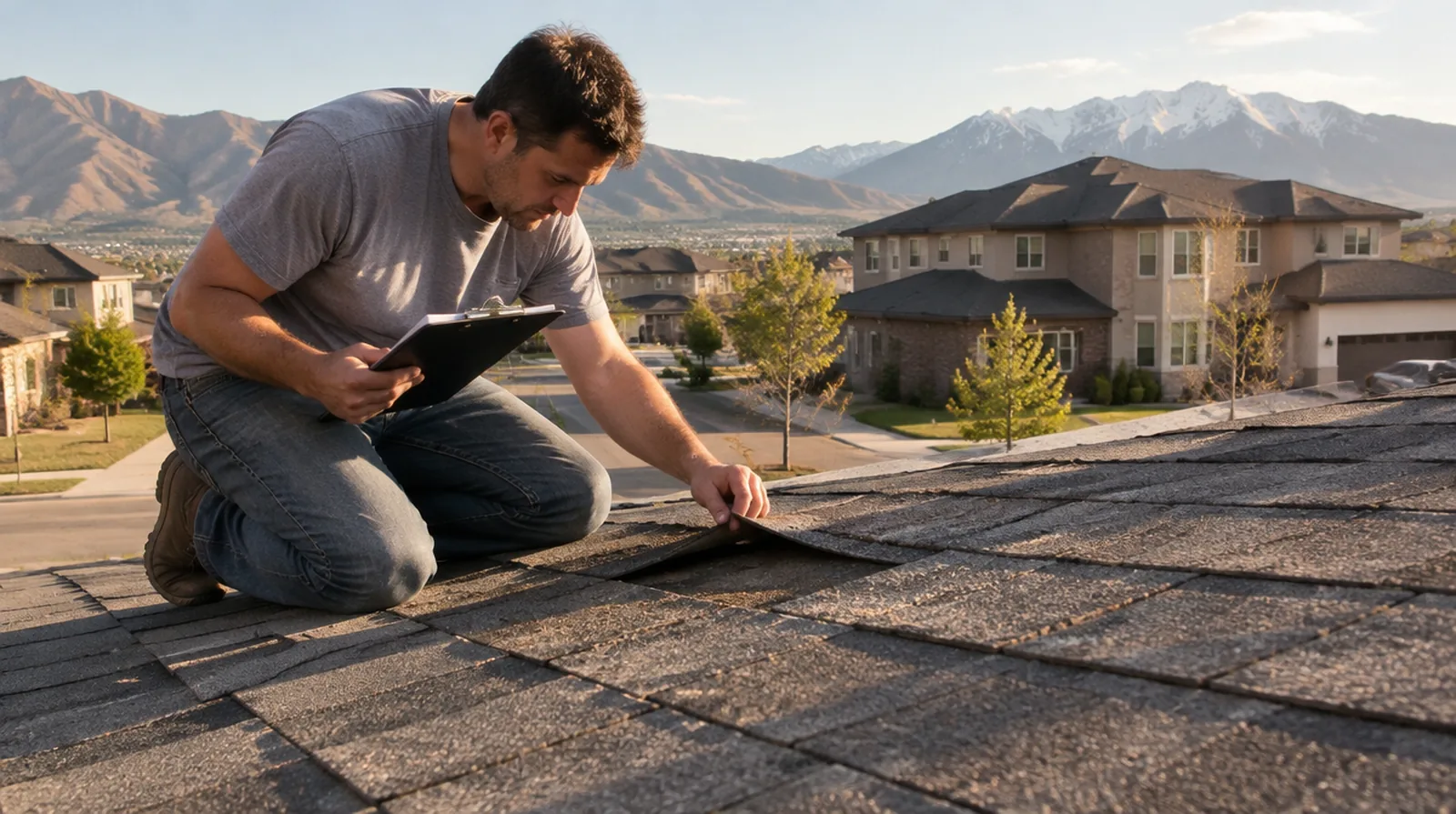
What our roof inspection covers
We walk every slope and examine the surface closely. On shingles, we look for curling, cracking, granule loss, lifted tabs, exposed nails and hail bruising. On low-slope sections, we check seams, blisters and ponding. Ridge caps, valleys and the roof edge all get attention.
Flashing around chimneys, walls, skylights and vent pipes is checked carefully, since freeze-thaw loosens it over time. We look for signs of past ice dams along the eaves, such as stained fascia or soft decking. Gutters and downspouts are inspected for how well they move spring melt away. Inside, when the attic is accessible, we check for stains, frost, damp insulation and ventilation.
When to schedule a roof inspection
- Before buying a home
- Before selling, to avoid last-minute surprises
- After a hailstorm or strong windstorm
- In spring, after the snow melts
- When you notice stains, icicles or missing shingles
What happens during the inspection
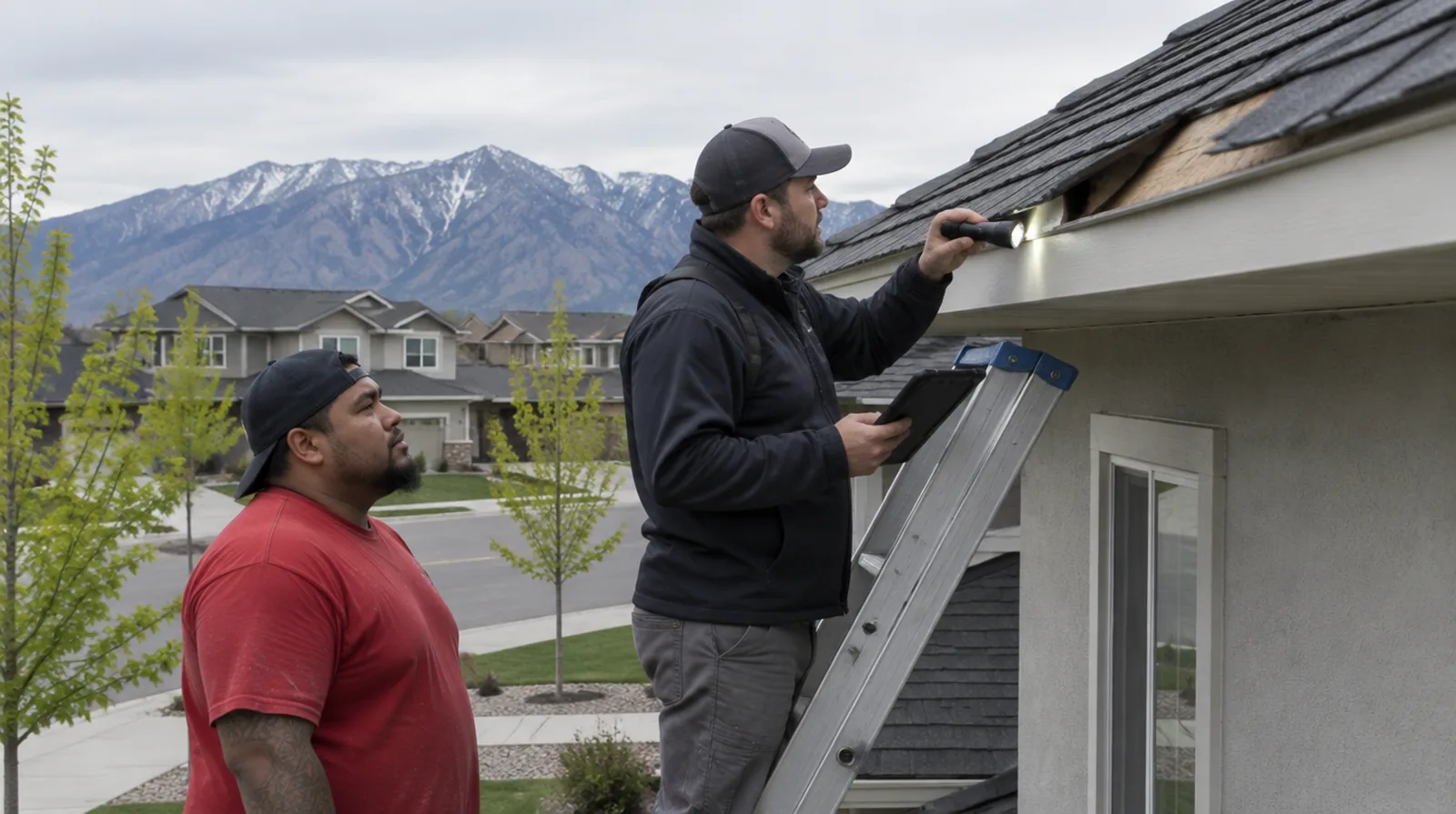
We start with a walk around the house to see the roof layout and anything obvious. Then we go up and work methodically across each slope, photographing what we find. Inside, we check ceilings where you have noticed stains, then go into the attic if it is safe.
When we are done, you receive a written report with photos, grouped by priority: issues that need attention soon, items to monitor, and areas in good condition. If you want a price for repairs, we can include one, with no obligation.
Spring inspections after winter
Snow covers a lot of damage. Lifted shingles, cracked flashing and ice dam damage often go unnoticed until the roof is clear. A spring inspection catches those problems while the weather is ideal for repairs and long before the next winter arrives.
Hail inspections
Hail damage is hard to spot from the ground. Bruised shingles may look fine at first but lose granules and age faster. After a hailstorm, we inspect closely, mark and photograph impacts, and give you a clear account of the damage. If you plan to contact your insurance company, our documentation can help.
Roof inspections for home buyers
A general home inspector may look at the roof from a ladder or the ground. We get on the roof and into the attic. For buyers, that means a clearer view of remaining roof life and any repairs needed soon, which can be useful when talking with the seller and your insurer.
What you get in the inspection report
The report lists each item we found with a photo and a short explanation, organized by slope or area of the house. We mark what needs attention before winter, what to keep an eye on, and what is in good shape. If the roof is approaching replacement, we give you a realistic sense of how much time is left so you can budget. You are welcome to share the report with your agent, another contractor or your insurer.
How often to inspect
For most West Jordan roofs, an inspection every two to three years is plenty. After a significant hailstorm or windstorm, or once the roof is getting older, an annual spring check is a good habit.
Inspections and insurance
If a storm has hit, photos and notes from an independent roof inspection give you something concrete to bring to your insurer. We describe what we see without exaggerating it, which helps the conversation stay factual. Some damage turns out to be normal wear, and we will say so.
Roof inspection FAQs
How long does an inspection take?
About an hour for most homes, longer for large or steep roofs.
Can you inspect a snow-covered roof?
Not thoroughly. We recommend waiting until the roof is clear for a complete inspection.
Should I be home?
It helps but is not required.
Will you go into the attic?
Yes, when there is safe access.
Want a clear read on the roof?
Call (385) 417-5501 to schedule a roof inspection in West Jordan.