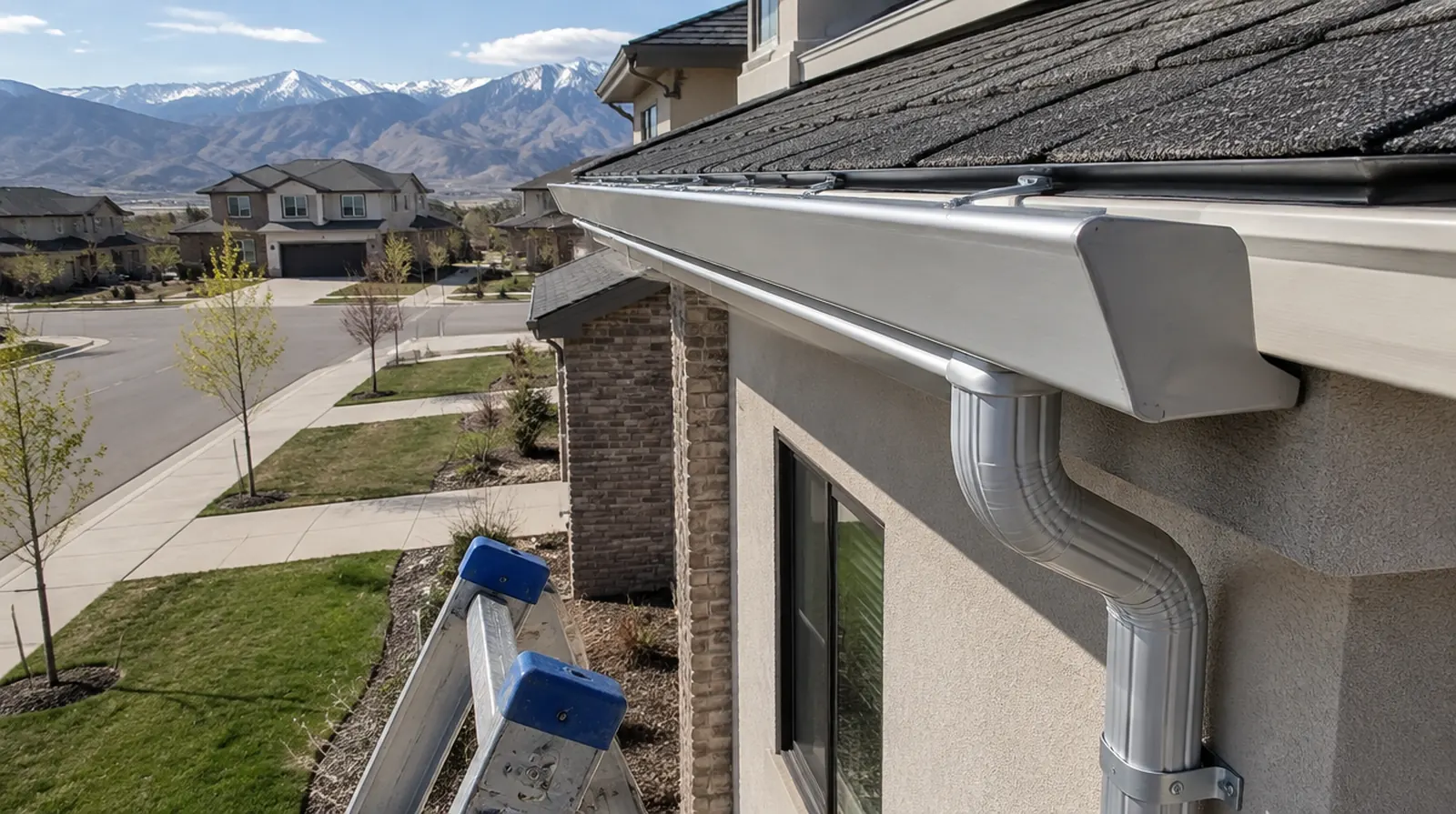
Why gutter installation matters in West Jordan
Many homes here have basements, and many have window wells. Water dripping off the roof edge collects in those wells, soaks the soil along the foundation and can find its way into the basement. In winter, runoff that lands on walkways and driveways freezes into slick ice. Gutters collect that water and carry it away from the house.
Melting snow is a big part of the picture. On sunny winter days, snow on the roof melts steadily and drains for hours. A good gutter system handles that slow, constant flow as well as the sudden bursts from summer storms.
How we install gutters
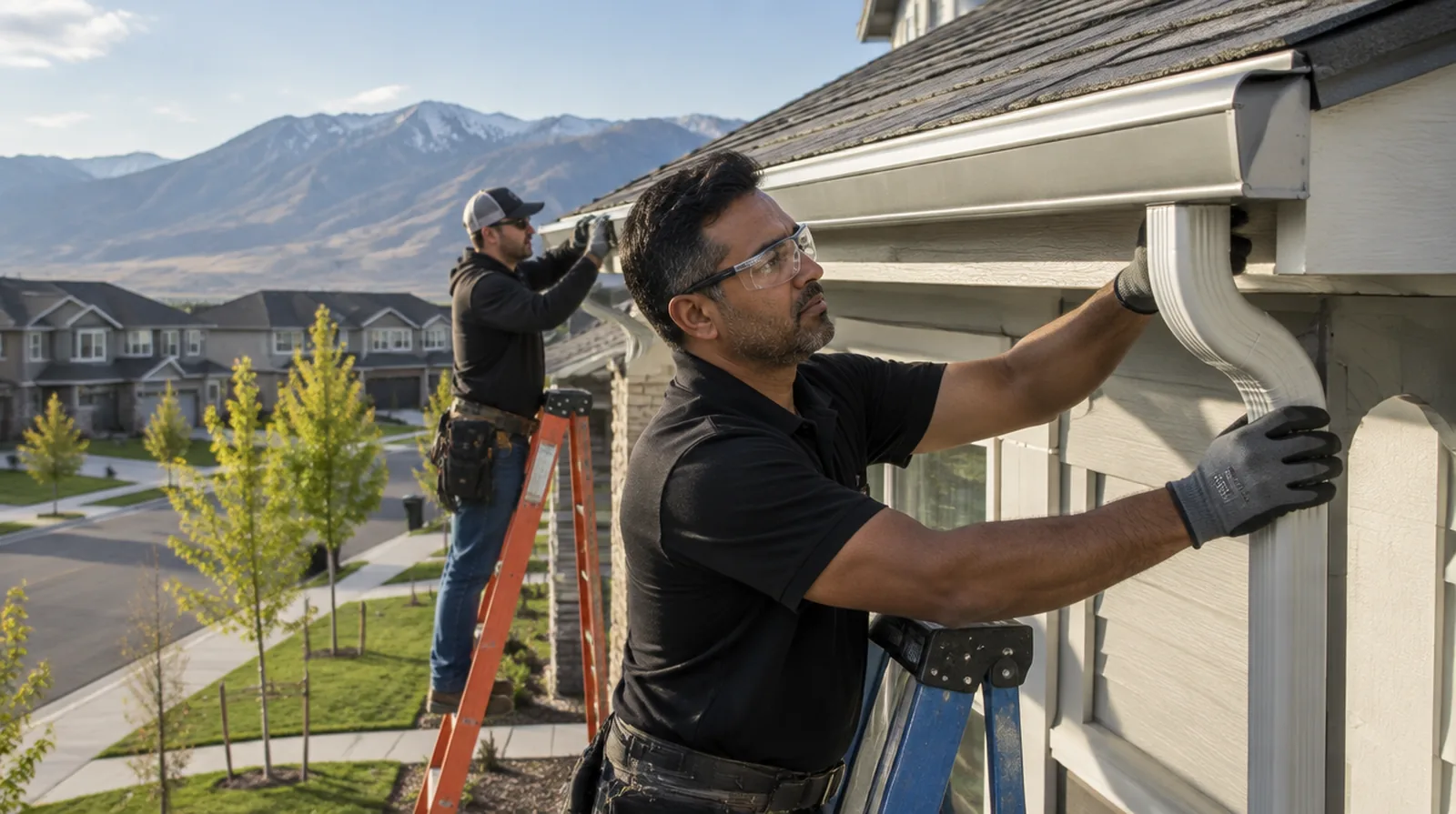
We look at your roof edges, the slope of your lot and where water currently lands, including any window wells. Then we plan gutter runs and downspout locations so water is carried well away from the foundation and walkways. Seamless aluminum gutters are formed on site to the exact length of each run, so there are fewer seams to leak.
Gutters are fastened with heavy-duty hidden hangers at close spacing, which matters when snow and ice add weight. We set the slope toward the outlets and attach downspouts with extensions or connections to underground drains. If fascia boards are damaged, we point that out before installation. If the roof is due soon, it often makes sense to install gutters after a roof replacement so the new drip edge and gutters work together.
Gutters and winter ice
Gutters can fill with ice during cold snaps, especially on roofs with ice dam problems. Properly sized gutters, secure hangers and downspouts that drain freely help reduce that risk. If ice dams are a recurring issue, improving attic ventilation and insulation is the real fix, since gutters alone cannot prevent them. In some cases, heat cable along the eaves and in downspouts can help keep water moving.
Sizes, colors and guards
- Larger gutters and downspouts for big two-story roofs
- Colors to match trim, brick or siding
- Guards for homes near trees
- Extensions to carry water past window wells
Gutter maintenance
Clean gutters in late fall, after the leaves drop and before snow arrives, so meltwater has a clear path. Check downspouts in spring for debris. Avoid knocking ice out of gutters with tools, which can bend or loosen them.
Downspouts and basement protection
With so many basements in West Jordan, where downspouts discharge is just as important as the gutters themselves. Water released next to the foundation soaks into backfill soil and can find its way through basement walls or into window wells. We use extensions, splash blocks or underground drain lines to move water well away from the house, toward lawns or areas that drain naturally. We also avoid sending water across driveways and sidewalks where it would freeze in winter.
Gutters on steep two-story roofs
Water picks up speed on steep pitches and can overshoot a gutter. We position the gutter and drip edge so fast-moving runoff still lands in the trough.
Heat cable at problem spots
On north-facing eaves that ice up every winter, a run of heat cable along the gutter and down the spout can keep a path open for meltwater. It is not a cure for ice dams, but it helps at stubborn spots.
Gutter installation FAQs
Will gutters cause ice dams?
No. Ice dams are caused by heat escaping into the attic. Clogged gutters can make them worse, so keeping gutters clear helps.
How far should downspouts discharge from the house?
Far enough to keep water away from the foundation and window wells. We plan extensions or drains accordingly.
Can gutters handle heavy snow?
With strong hangers at close spacing, they hold up well.
How long does installation take?
Most homes are done in a day.
Need new gutters?
Call (385) 417-5501 for a free gutter installation estimate.