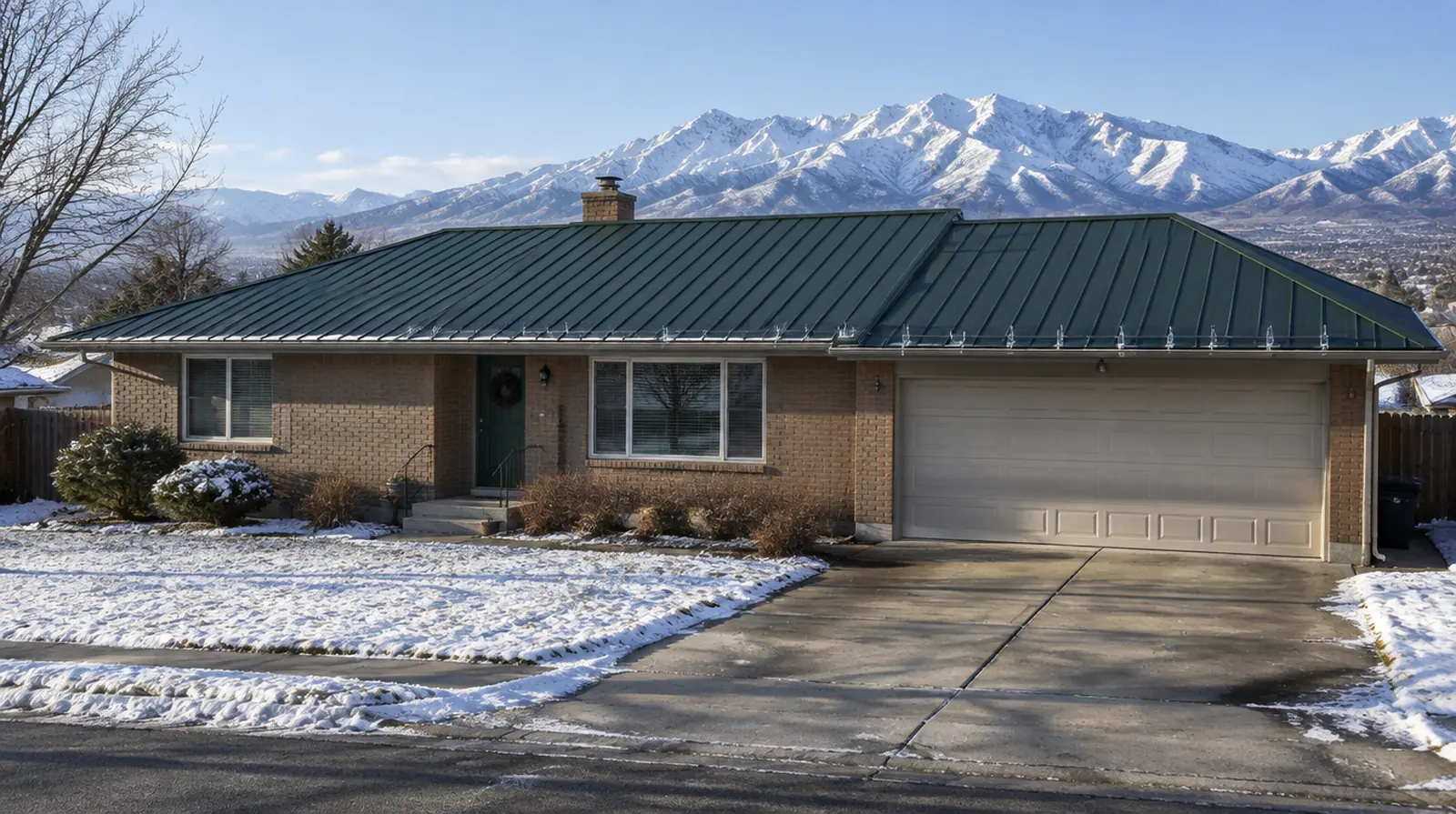
What a metal roof does well in the Salt Lake Valley
Our winters are not brutally cold, but storms can drop a foot of heavy snow at a time, and inversions can keep it parked on north-facing slopes for weeks. On a shingle roof, that snow melts against warm attic air, refreezes at the cold eaves and builds ice dams. Steel sheds snow far more readily, so less weight sits on the roof and less water backs up under the edge.
Summers run the other way. July afternoons regularly reach the high 90s, the air is dry, and at well over 4,000 feet the sun is intense. Dark shingles bake and turn brittle on south and west slopes. A light or mid-tone painted steel roof reflects more of that heat, and a quality finish holds its color for decades rather than chalking out in a few years.
Built for the loads this city requires
West Jordan's Building and Safety division requires a permit for reroofing, and roofs have to meet the design loads used in the area. Residential wind speed is set at 105 mph, and ground snow loads come from Utah's statewide snow load data, which changes with elevation, so a home up in the foothills can carry a higher design load than one on the valley floor near the Jordan River. We pull the permit and choose panel gauge, clip spacing and fastening to suit your address.
There is also a seismic point worth mentioning. The Wasatch Front is earthquake country, and a steel roof is much lighter than tile and lighter than a heavy layered shingle roof. Less weight overhead means less load on the framing when the ground moves. That alone is not a reason to switch, but it is a real benefit when you are already replacing the roof.
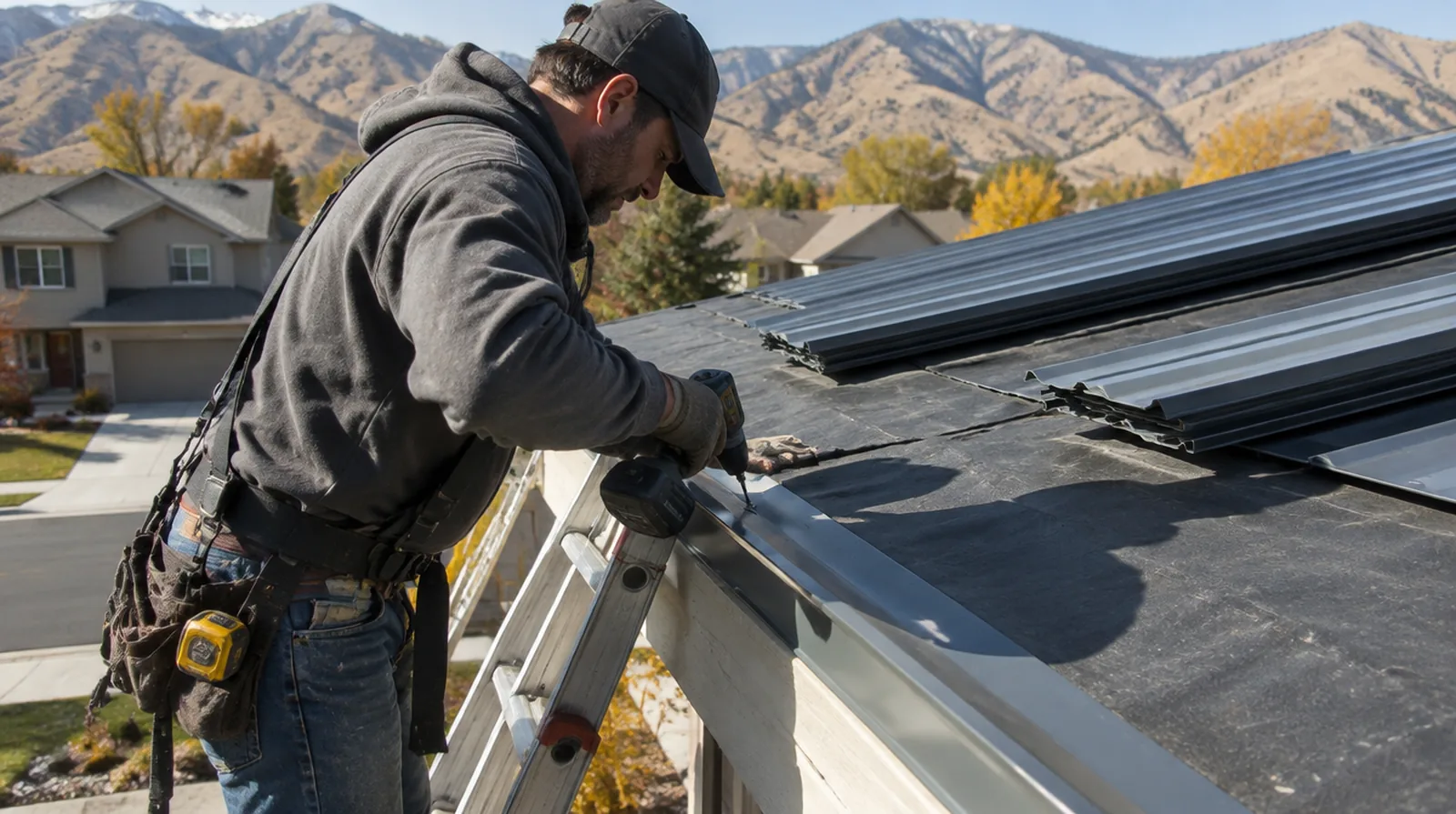
Our install, step by step
- Remove the old roof. Every layer comes off so we can inspect the deck. Ramblers from the 1960s and 70s sometimes have board sheathing or old patches that need new plywood.
- Protect the edges. Ice barrier membrane goes along the eaves, up the valleys and around chimneys and vents. High-temperature synthetic underlayment covers the field.
- Set trim and flashings. Drip edge, eave cleats and valley pans go down before the panels so every lap sheds water downhill.
- Run the panels. Standing seam panels are cut to the length of each slope, clipped to the deck and seamed tight. Clips let the steel expand in summer heat and shrink on cold nights without stressing the fasteners.
- Finish the ridge and guards. A vented ridge keeps the attic dry. Snow guards go where sliding snow could hit a walkway, the front porch, a parked car or a gas meter.
Where snow guards matter on your house
Sliding snow is the one thing every metal roof owner here has to plan for. On a rambler with the entry under the main eave, a row of guards over the door is a must. Two-story homes with a lower roof below an upper slope need guards on the upper roof, or the lower roof takes a pounding. We map those spots before ordering material.
Fire and the foothill neighborhoods
Homes on the west side of the city sit closer to open brush on the Oquirrh benches, where dry grass carries fire in late summer. Metal roofing systems commonly carry a Class A fire rating, the highest for roof coverings, which is one reason homeowners near open ground ask about it. Ask us to show you the rating for any system you are considering.
What goes into the price
- Panel profile and steel gauge
- Paint system, PVDF versus standard polyester
- Roof size, pitch and the number of valleys, hips and skylights
- Deck repair after tear-off
- Snow guards, gutters and trim colors
Metal costs more than shingles at the start, often two to three times as much. Owners who plan to stay put usually come out ahead by skipping one or two future shingle replacements.
Questions West Jordan homeowners ask
Will it dent in a hailstorm?
Large hail can dimple steel. Thicker panels and textured finishes hide it best, and the roof keeps shedding water even with a cosmetic dent.
Can you install in winter?
Yes, on dry days. Panels and clips are not temperature sensitive the way shingle sealant strips are.
Does my HOA need to approve it?
Many newer neighborhoods do require approval for color and material. We supply spec sheets and samples for your application.
If you are weighing a repair first, our roof inspection will tell you how much life is left, and roof ventilation work pairs well with any new roof.
Want a roof that sheds Utah snow?
Call (385) 417-5501 to set up a measurement and a side-by-side look at panel profiles and colors.