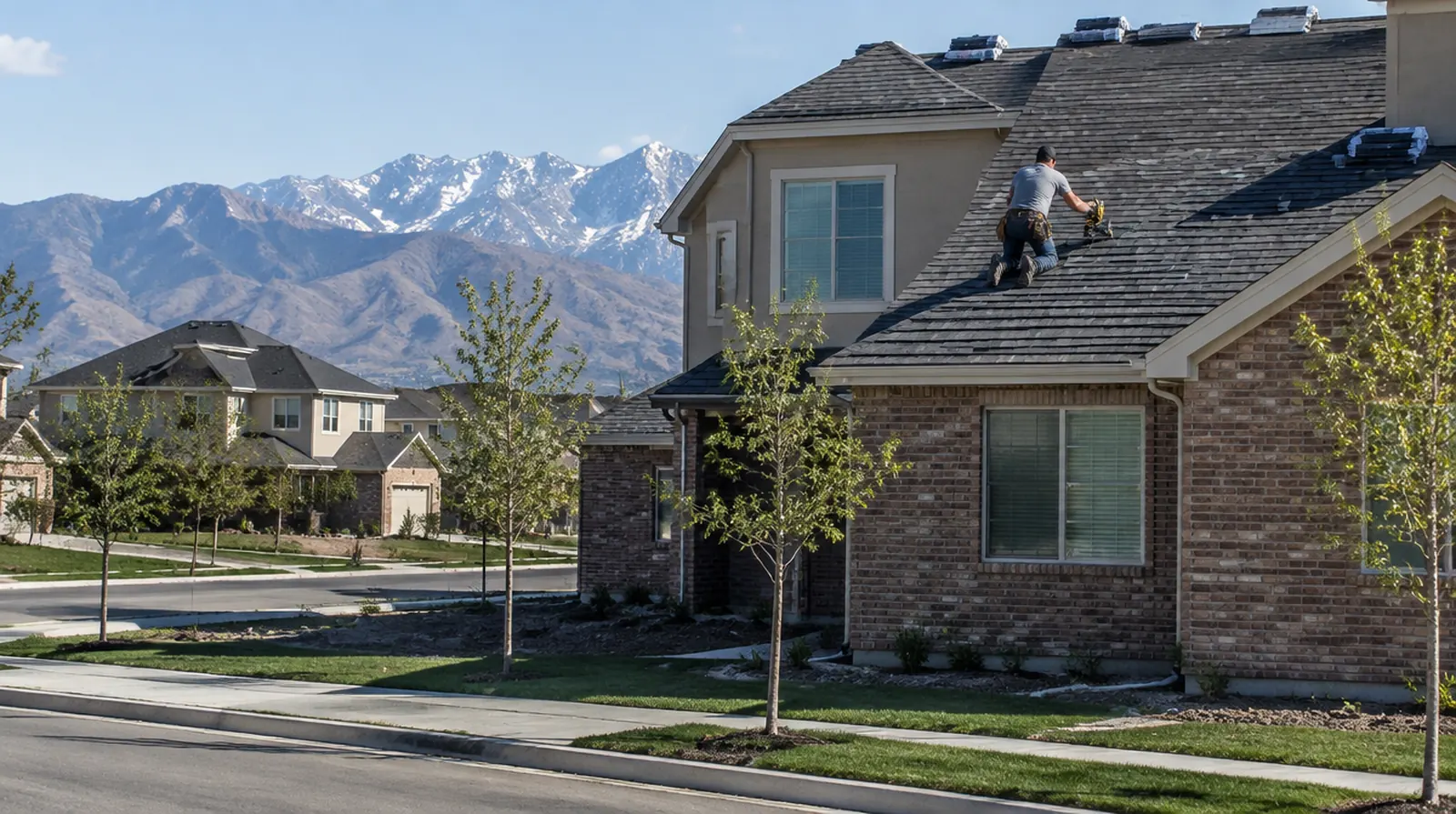
Why asphalt shingle roofing fits West Jordan
Shingles are practical here. They handle snow loads well, shed meltwater on the moderate and steep pitches common in the area, and are straightforward to repair after wind or hail. Architectural shingles add dimension to large two-story roofs and give older ramblers a fresh look. Many lines also offer improved impact resistance, which is worth considering given the occasional summer hailstorm.
The key is installation. Cold winters, strong UV and wind all test a shingle roof, and the details under and around the shingles determine how well it performs.
How we install a shingle roof
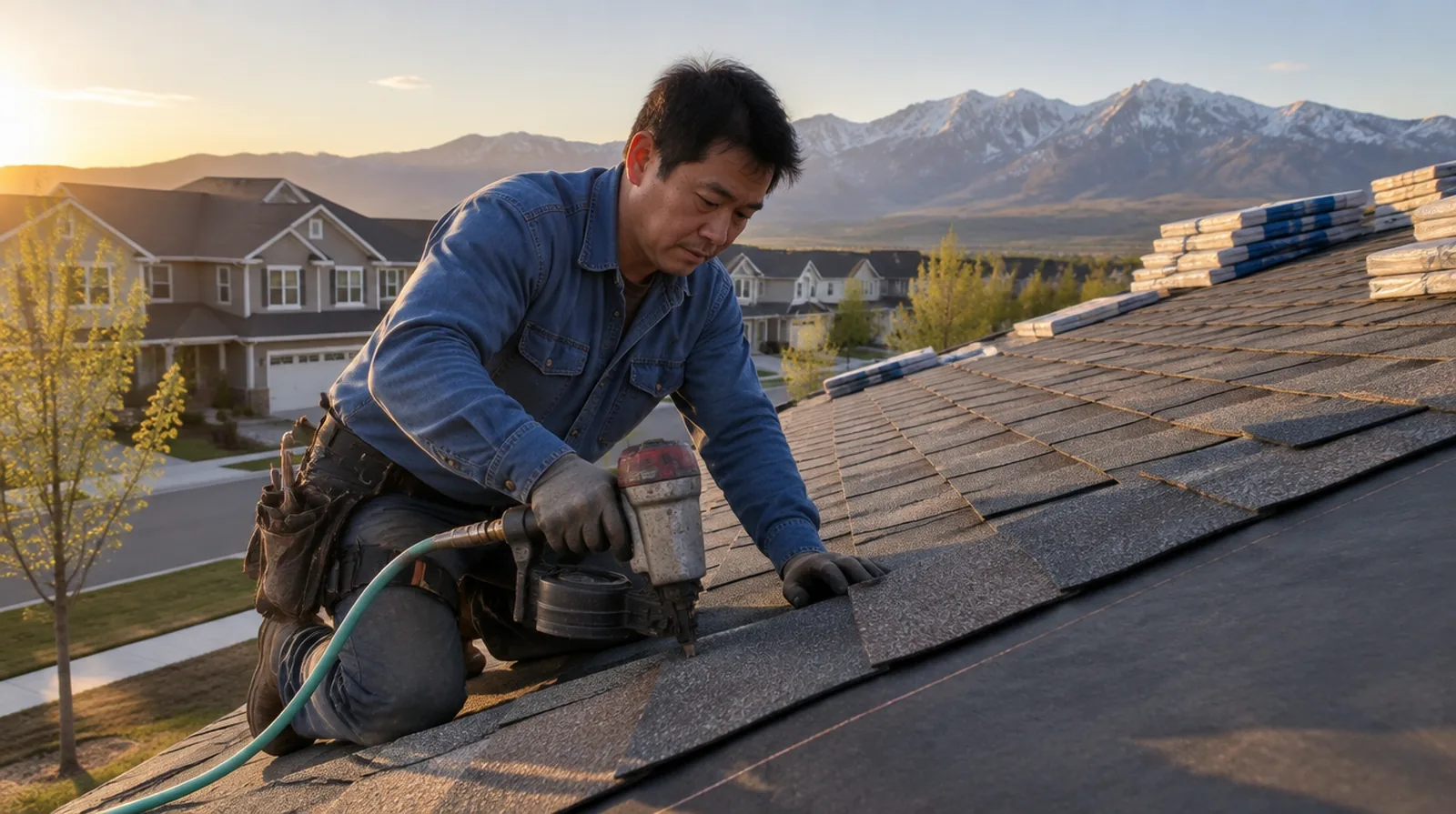
We tear off all existing roofing, including any second layer, and inspect the deck. Damaged wood is replaced, especially along the eaves where past ice dams may have caused rot. Then we install ice and water barrier along the eaves and in valleys, followed by underlayment over the rest of the roof. New drip edge and valley metal go on next.
Starter strips with adhesive line the eaves and rakes to resist wind uplift. Shingles are laid in straight courses and nailed according to the manufacturer's high-wind pattern when appropriate. Step flashing goes along walls and around chimneys, new boots go around vent pipes, and ridge caps finish the top over a ridge vent. If only part of your roof needs work, our roof repair service may be enough. For another take on shingle choices, see this guide from Commerce City Roofing.
Shingles and the Utah climate
Attic conditions matter year-round. In summer, a hot attic bakes shingles from below. In winter, warm air leaking into the attic melts snow and creates ice dams. Balanced roof ventilation helps on both fronts and supports a longer shingle life.
- Clear gutters in fall so meltwater can drain
- Avoid chipping ice off shingles, which damages them
- Check for lifted tabs after strong wind
- Have the roof inspected after hail
Choosing color and style
Darker shingles help snow melt off a little faster in winter, while lighter colors keep attics a bit cooler in summer. Most homeowners here pick a medium tone that suits their brick, stucco or siding. We bring samples so you can see them in daylight against your home.
Impact-resistant shingles
Some shingle lines are designed to resist hail impact better than standard products. They cost more, but some homeowners choose them for peace of mind. Ask your insurance agent whether they affect your premium, and we can show you the options available.
Shingle roof cost factors
- Roof size, pitch and complexity
- Shingle line and impact rating
- Layers removed and deck repairs
- Ice barrier and ventilation work
Every estimate is written.
Ice barrier: how far up the roof?
Ice and water barrier is a self-adhering membrane that seals around nails and stops meltwater from getting through if it backs up under shingles. Building code typically calls for it along the eaves, extending up the roof past the inside of the exterior wall. On low-pitch sections or homes with a history of ice dams, we may extend it farther. We also use it in valleys and around chimneys and skylights, where water concentrates.
Shingle roofs on newer Highlands homes
Homes in the newer western neighborhoods often have steep main roofs, several gables and long valleys. Each valley collects water from two slopes, so we use metal or closed-cut valleys with ice barrier underneath, and we take care that shingles are trimmed cleanly so runoff does not catch on uneven edges.
Asphalt shingle roofing FAQs
Can new shingles go over the old ones?
We recommend a full tear-off so the deck can be checked and ice barrier installed properly.
Can you install shingles in cold weather?
Shingles need warmth to seal. We schedule installations for suitable temperatures.
Do I need a permit?
Yes. We handle the permit with the city.
How long will the installation take?
Most homes take a few days.
Ready for new asphalt shingles?
Call (385) 417-5501 for a free asphalt roofing estimate.