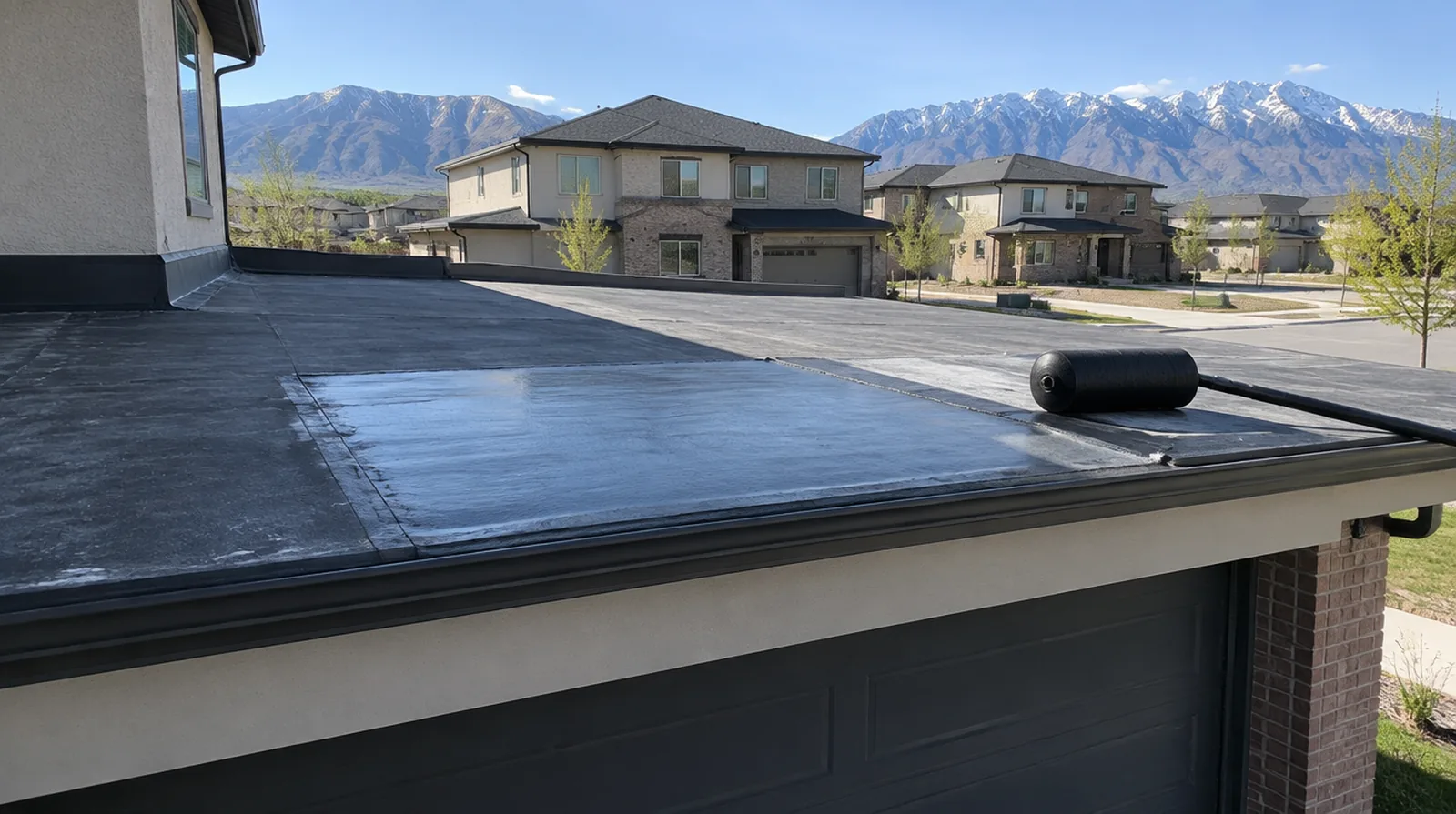
Why flat roofs need special care here
Low-slope roofs drain slowly, and in a snowy climate that becomes a bigger issue. Snow piles up on flat sections, melts slowly during the day and refreezes at night. Water that cannot drain freezes in seams and low spots, expanding and widening any gap. By spring, a small split can become a steady leak.
Low-slope roofs here are often found on porch covers, garage additions, sunrooms and the occasional modern-style home. The joint where they connect to a steeper roof or wall is a common weak point, since meltwater from above lands right there.
Signs your low-slope roof needs flat roof repair
- Puddles that remain after melt or rain
- Cracks, blisters or soft spots
- Seams separating at edges
- Ice buildup that never drains
- Stains on the ceiling below
How we repair low-slope roofs
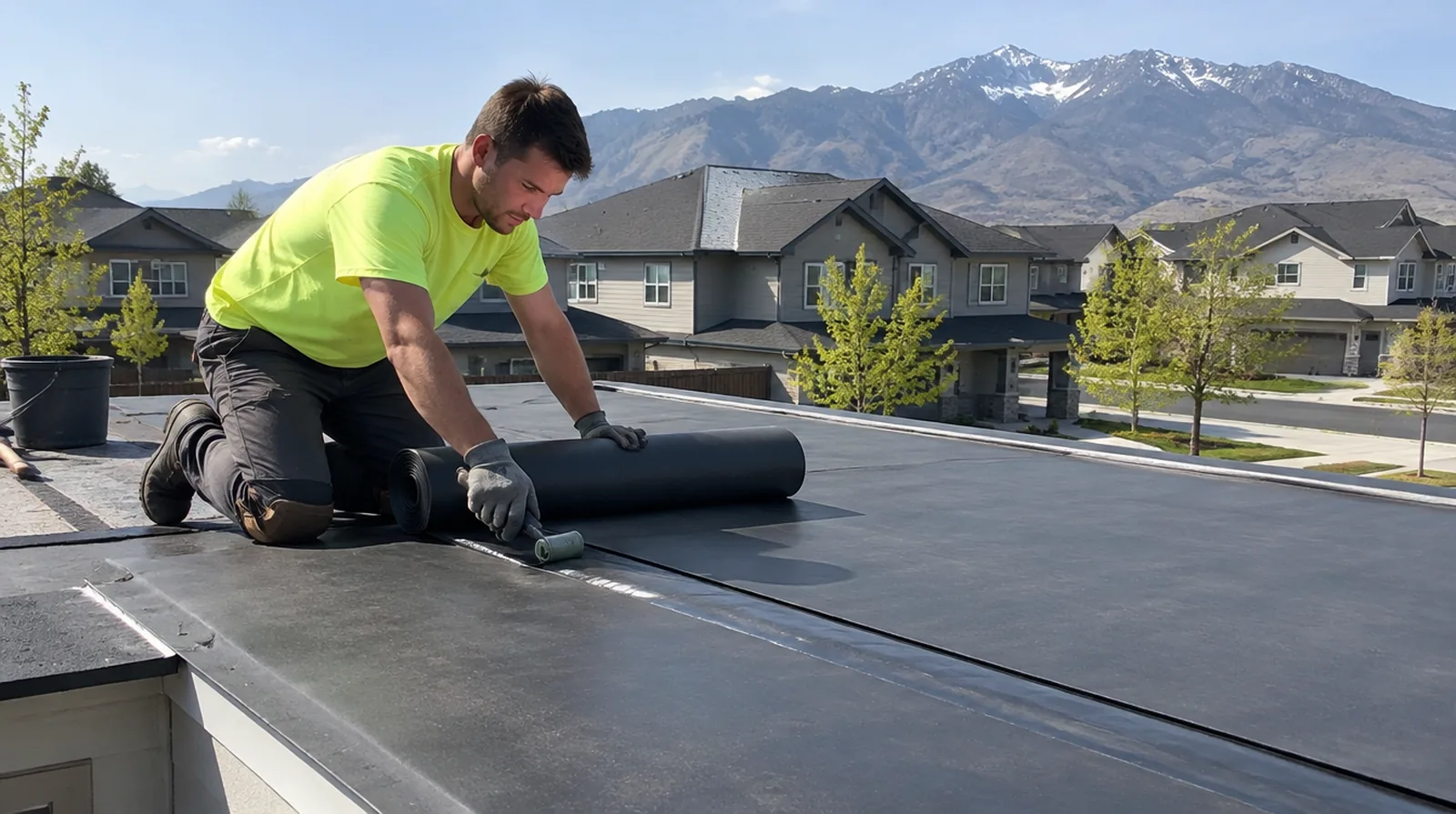
We start by identifying what is failing. Leaks can come from split seams, punctures, failed drains or flashing at walls and roof transitions. Ponding usually means the deck has sagged or the drain sits too high. We look at the entire section before recommending a solution.
For localized damage, we cut out the failed area, dry and prepare the surface, and install a compatible patch with generous overlaps. Seams are sealed and checked. At transitions, we rebuild flashing so meltwater from the upper roof flows onto the membrane rather than behind it. If the membrane is worn throughout, we will price a replacement for comparison.
Dealing with ponding and ice
Standing water on a flat roof turns into standing ice in winter, which is even harder on the membrane. Correcting slope with tapered insulation, adding or lowering drains, or enlarging scuppers helps water leave the roof before it can freeze. On some roofs, heat cable at drains can keep them open during cold snaps, though addressing slope is usually the better long-term fix.
Repair timing
Membrane repairs need dry, reasonably warm conditions to bond well. Late spring through early fall is ideal. In winter, we can apply temporary fixes to stop active leaks, then return for a permanent repair when the weather allows.
Snow removal on flat sections
If heavy snow builds up on a low-slope porch or addition, gentle removal with a plastic roof rake can reduce load and meltwater. Avoid metal shovels and chipping at ice, which can puncture the membrane. If you are unsure, call us before climbing up.
Low-slope additions and two-story homes
On many two-story homes, a low-slope roof covers a porch or a bump-out beneath an upper wall. Snow slides off the upper roof and lands on that section, adding load and meltwater. The flashing where the low roof meets the wall above takes a beating. We pay close attention to that joint, using generous membrane laps and counter-flashing so water from the upper wall and roof has a clean path onto the membrane.
Choosing between repair and replacement
If damage is limited and the membrane is still flexible, a repair is good value. If the surface is brittle, has multiple patches or sits over wet insulation, replacement is the more reliable choice, and we show you photos to explain why.
Membranes suited to cold weather
Single-ply and modified bitumen membranes both work here. The right choice depends on the existing system and how the section drains; we explain the options with your budget in mind.
Flat roof repair FAQs
Can a coating fix my flat roof?
Coatings help a sound membrane but do not fix seams, wet decking or drainage problems.
How long does a repair take?
Most patches are done in a single visit.
Can you repair a flat roof in winter?
Temporary fixes, yes. Permanent repairs hold up better when done in warmer weather.
Can you replace just the porch roof?
Yes, and we tie it into the main roof properly.
Have a low-slope leak?
Call (385) 417-5501 for a free flat roof repair look.