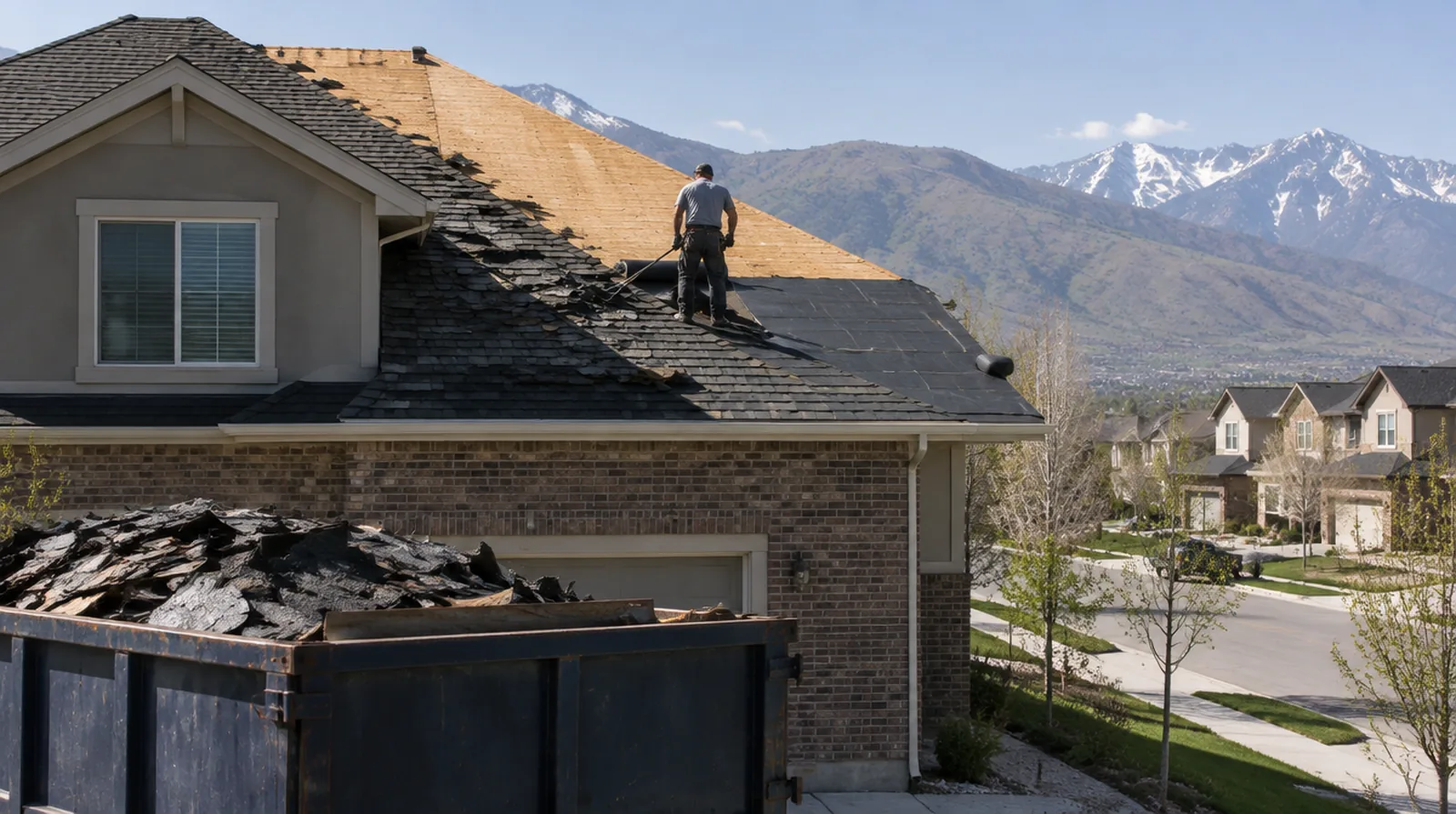
Signs you need a roof replacement
Heavy snow loads, freeze-thaw and strong UV take a toll. Consider replacement if you notice:
- Curling, cupping or cracking shingles on several slopes
- Widespread granule loss or hail bruising
- Recurring ice dam leaks at the eaves
- Soft or sagging areas of decking
- An existing second layer of roofing
- Repairs that keep failing
If you are not sure, a roof inspection will give you a clear picture first.
How a roof replacement comes together
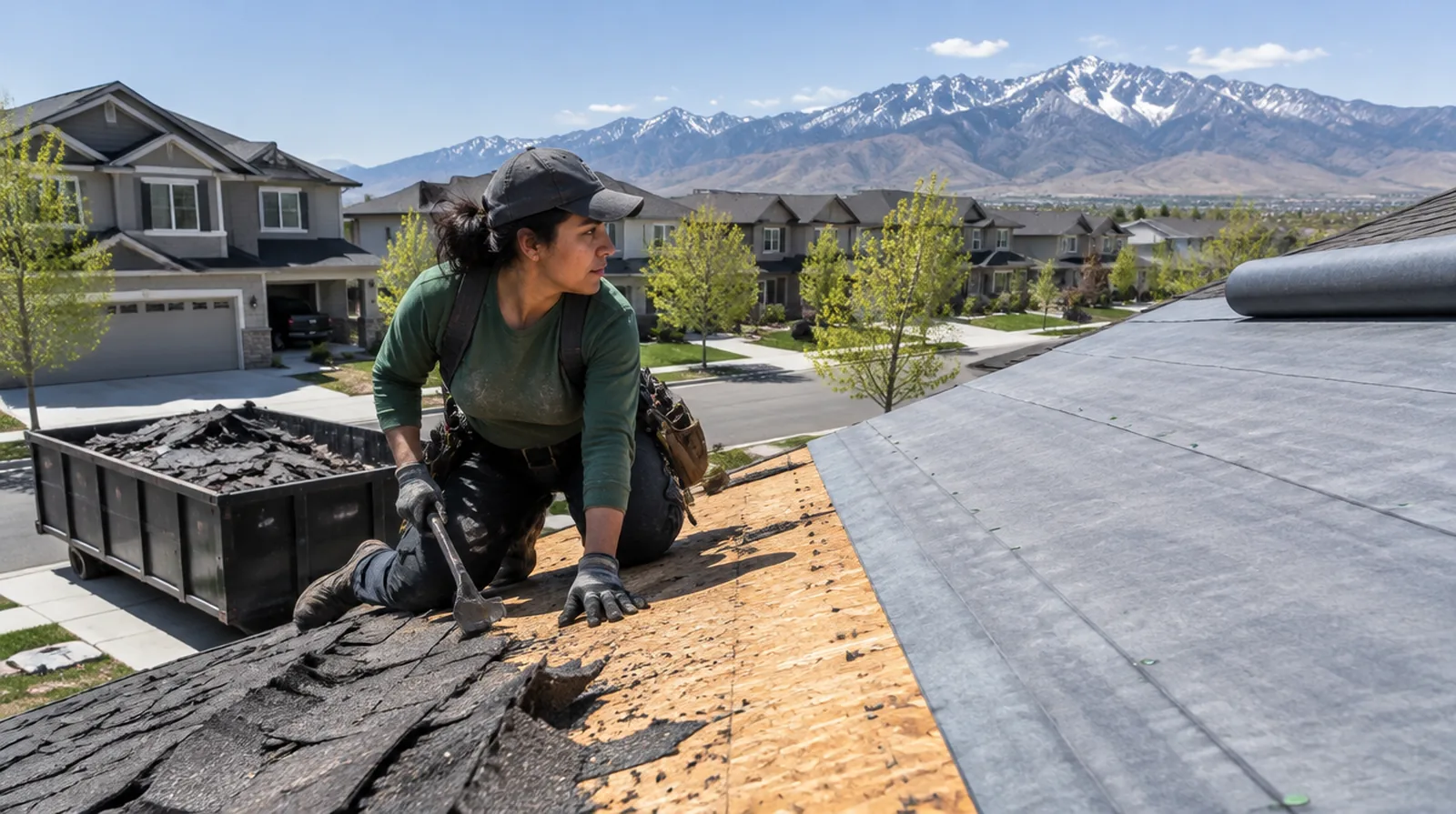
Planning. We measure the roof, help you choose shingles and colors, and pull the permit with the city. We go over ventilation and ice barrier needs as part of the plan, since both matter here.
Tear-off. All existing layers come off down to the deck. We protect landscaping, window wells and the driveway and keep debris contained.
Deck repair. With the deck exposed, we check every sheet. Eaves damaged by past ice dams are a common find, along with soft spots around chimneys and skylights. We replace what is damaged so the new roof has a solid base.
Cold-climate protection. Ice and water barrier goes along the eaves and in valleys, where meltwater is most likely to back up. Underlayment covers the rest of the deck. New drip edge, valley metal and flashing go on next.
New roof. Shingles are installed with nailing patterns suited to valley wind, followed by ridge caps and vents. After inspection, we clean up, sweep for nails and walk the roof with you.
Choosing the right roof
Architectural asphalt shingles are the standard here. They handle snow, wind and UV well when installed correctly and come in colors that suit brick ramblers and newer stucco and siding homes alike. Some product lines offer impact resistance that helps in hailstorms. Metal is an option for those who want it. We help you compare durability, appearance and budget.
Ventilation and insulation during a re-roof
Ice dams are largely an attic problem. When warm air leaks into the attic and heats the deck, snow melts and refreezes at the eaves. A replacement is the best time to add a continuous ridge vent, open soffits and make sure baffles keep insulation clear. We will also point out any obvious air leaks into the attic that you may want an insulation contractor to seal.
Replacement cost factors
- Roof size, pitch and complexity
- Layers to remove
- Shingle line and color
- Deck repairs and ice barrier coverage
- Ventilation upgrades
Your estimate lists every item.
Replacing the roof on an older rambler
Brick ramblers from the 1960s and 70s are some of the most common homes in older parts of the city. Many have a second layer of shingles and original plank or thin plywood decking. Removing both layers lets us check every board, replace weak sections and install new sheathing where needed. These homes also tend to have limited soffit venting, so a replacement is the ideal time to open up the eaves and add a ridge vent. The result is a roof that stays colder in winter and cooler in summer.
Protecting window wells and landscaping
Window wells sit right where debris falls during tear-off. We cover them with plywood before work starts and clear any stray nails or granules when we finish.
Hail and replacement decisions
After a damaging hailstorm, insurers sometimes cover a full replacement. We document impacts with photos so you have clear information to share with your adjuster.
Roof replacement FAQs
When is the best time of year to replace a roof?
Late spring through early fall, when shingles can seal properly. We can sometimes work in mild winter stretches.
How long does it take?
Most homes take a few days, depending on size and weather.
Will a new roof stop ice dams?
A new roof with ice barrier protects against leaks from ice dams. Reducing ice dams themselves depends on ventilation and insulation.
Do I need to leave home?
No. Most families stay home during the work.
Planning a roof replacement?
Call (385) 417-5501 for a free on-roof estimate and a written scope.