What the Salt Lake Valley does to a commercial roof
West Jordan sits at about 4,300 feet on the west side of the valley, and the climate is harder on roofing than the map suggests. Winters bring heavy, wet snow that can sit for days and then melt and refreeze. Summers are dry and the sun is strong at this elevation, so ultraviolet light slowly bakes membranes and coatings. Spring and early summer thunderstorms can drop hail, and canyon winds can pull at loose edges and flashing along the Oquirrh foothills.
On a flat or low-slope roof, those swings show up in the same places again and again: seams that open at the parapet, flashing that cracks where it was glued to a cold wall, and low spots where meltwater sits and finds a way in. Because a leak over a stocked warehouse or a clinic costs far more than the repair, we look for these early.
Buildings we roof around West Jordan
- Retail centers and pad buildings near Jordan Landing and along 7800 South and 9000 South, usually single-ply roofs with a lot of rooftop equipment.
- Warehouses and light industrial toward Mountain View Corridor and the 5600 West area, often big tilt-up buildings with metal or membrane roofs and long drainage runs.
- Offices, clinics and churches with low-slope sections, skylights and tall parapets that trap snow.
- Older farm-era buildings that have become shops, storage or small businesses and still carry decades-old built-up or metal roofs.
Roof systems that suit this climate
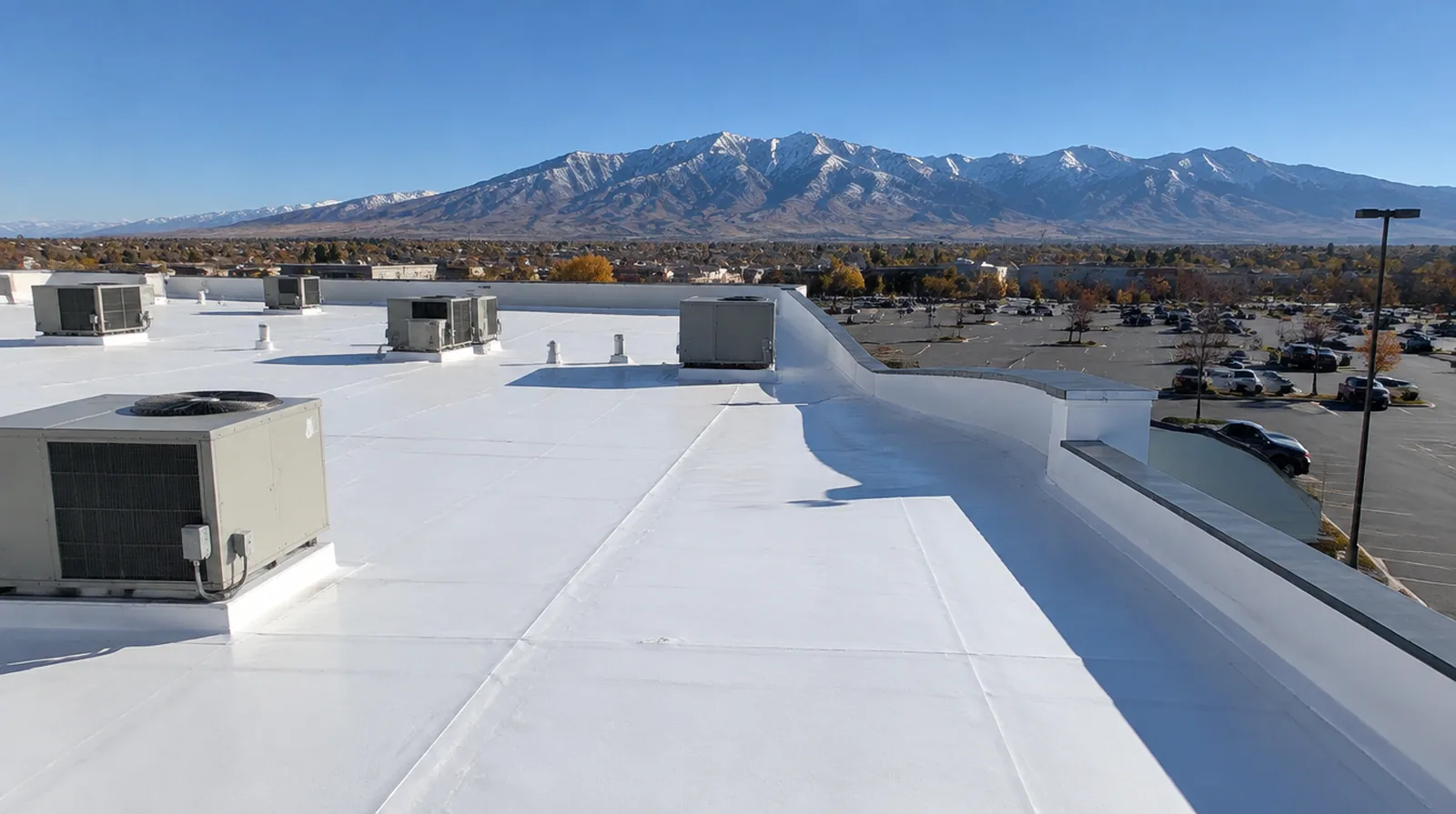
TPO and PVC. White single-ply membranes with welded seams are the most common choice on newer flat roofs here. They reflect summer sun, and PVC holds up well where grease or chemicals vent onto the roof, such as around restaurants.
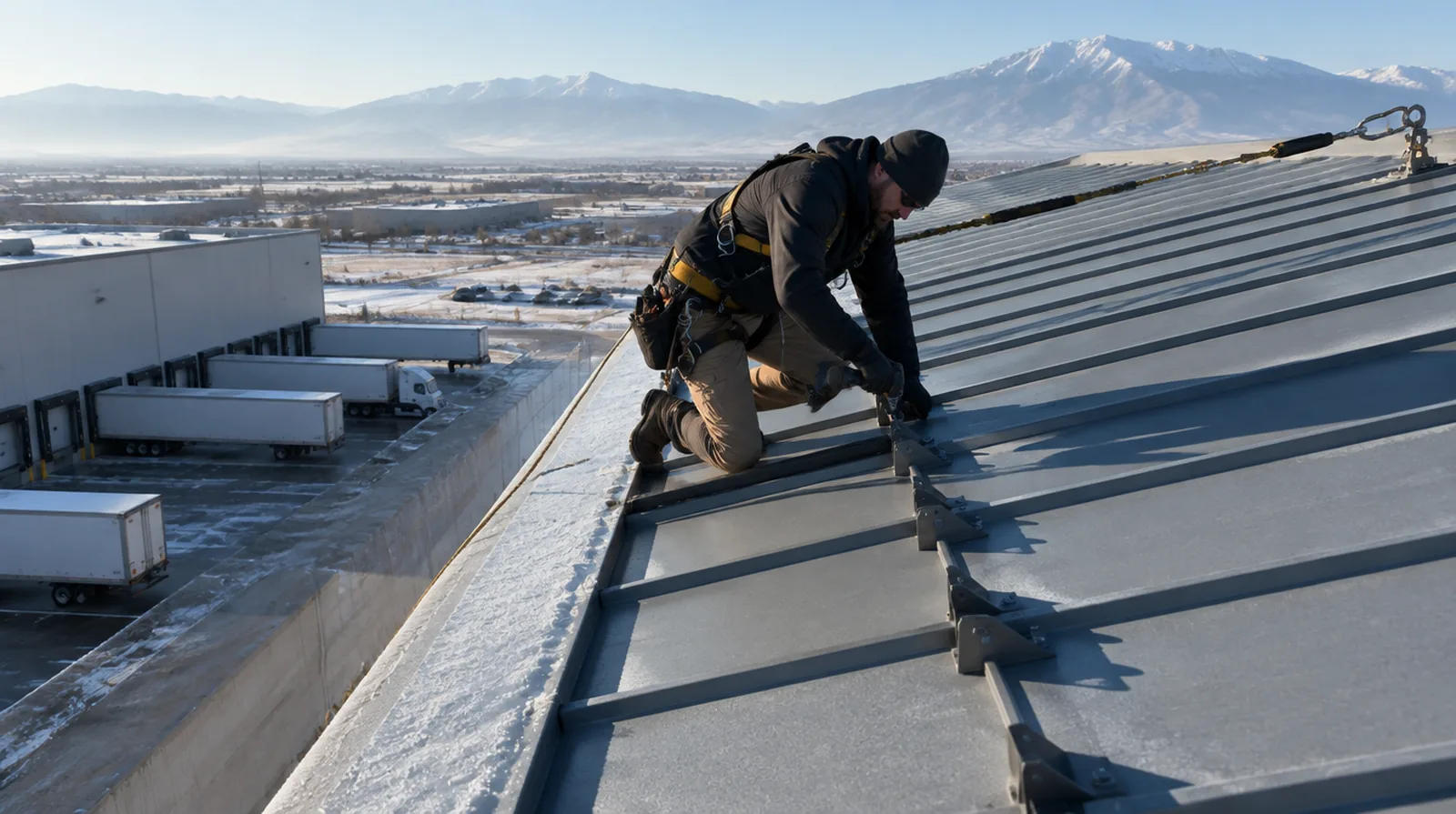
Standing seam metal. Metal sheds snow well, and snow guards keep it from sliding onto a loading dock or sidewalk in one sheet. We pay close attention to fasteners and seam clips so the roof can expand and contract with big temperature swings.
Coatings. If a roof is sound but tired, a seamless reflective coating over repaired seams can add years of service for less than a tear-off. It only works on a dry roof without wet insulation, so we test before we recommend it.
Insulation and drainage. Snow load makes slope and drainage matter. We add tapered insulation to fix ponding, and we check scuppers and drains before winter so they are clear when the melt starts.
How a commercial job runs
Walk and measure. We go over the roof surface, edges, curbs, drains and penetrations and check the deck from inside if we can. Moisture in the insulation tells us whether a repair or a reroof makes sense.
Written scope. You get photos, a plain description of what is wrong and a price for each option, so you can compare a repair, a coating and a replacement.
Permits and planning. Reroofs usually need a permit from the city, and we plan the work around your tenants, deliveries and customers. Roofs are done in sections so the building stays dry at the end of every day.
Install and cleanup. We protect HVAC units, vents and landscaping, use magnets on the lot and haul away debris. A final walk with you confirms drains flow and flashing is tight.
Timing around Utah weather
Adhesives, sealants and coatings need dry weather above roughly 40 to 50 degrees, so most big reroofs run from late April through October. Late fall is a good time for repair work and drain cleaning, while a pre-winter inspection finds the soft spots before snow arrives. If a roof leaks in January, we can often make a temporary seal and plan the permanent fix for spring.
Keeping a roof healthy
Have the roof looked at twice a year, in spring and again in fall, and after any hailstorm. Keep drains and scuppers free of leaves and grit, and do not let service crews walk on membrane roofs without protection. Our roof inspection service gives you a written report you can use for budgeting or an insurance claim, and for smaller flat sections, see flat roof repair.
Common questions
Can you work while we stay open? Yes. Most roof work happens above your tenants, and we schedule noisy steps outside peak hours.
Do you work in nearby cities? Yes, including South Jordan, Taylorsville, Murray, Riverton, Herriman and Sandy.
How long does a reroof take? A small retail building can take a few days. A large warehouse may take a few weeks in sections.
Get your roof checked before the first big storm
Call (385) 417-5501. We will walk the roof, photograph what we find and give you a written scope and price.